Bible Study: Acts Week 6 Chapters 13-16:1-5: Clash of Cultures
Updated: Jun 13

Welcome to Week 6 of our Acts study. Last week, we witnessed the iron gate opening for Peter and the Gospel breaking through to the Gentiles in the house of Cornelius. This week, we transition from the church being scattered by persecution to being intentionally sent by the Holy Spirit. We follow Paul and Barnabas as they embark on what is known as the First Missionary Journey, an adventure filled with spiritual warfare, miraculous endurance, and a historic debate that defined the meaning of grace.
A New Name and a Blinded Magician
As the journey begins in Acts 13, we see a subtle but significant change: Saul is now called Paul. Rather than a name change at conversion, it is likely that as a Roman citizen and a Jew, he always held both the Hebrew name Sha’ul and the Greek Paulos.
Their first major encounter occurs in Cyprus against a magician named Elymas (also known as Bar-Jesus). Because Elymas tried to turn a Roman official away from the faith, Paul cursed him with temporary blindness. Ironically, as the magician lost his physical sight, the official, Sergius Paulus, gained spiritual sight and became the first convert of the journey.
Preaching from the Psalms to the Prophets
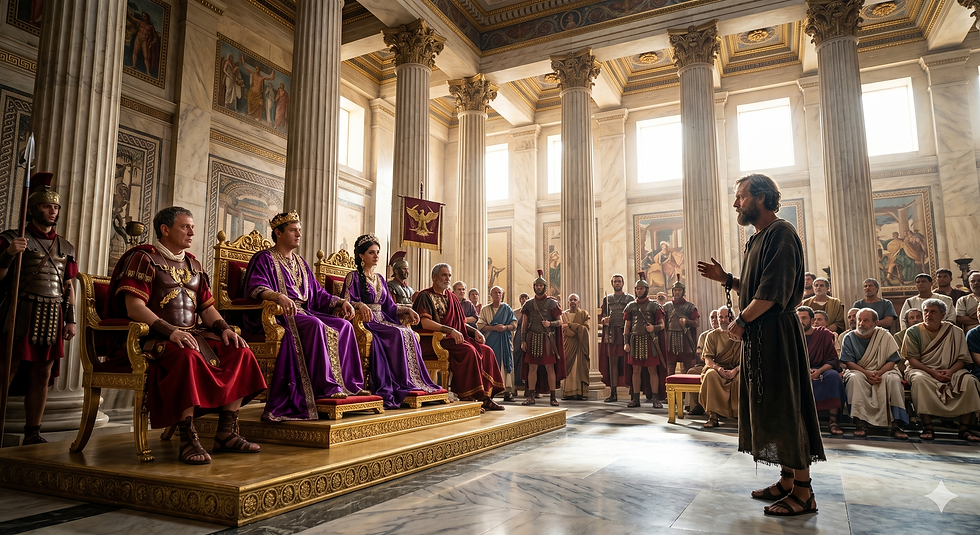
In Acts 13, Paul delivers a masterclass in biblical theology, effectively bridging the gap between ancient Jewish expectation and the reality of Jesus. Paul had these scriptures written on his heart; long before the existence of Bible apps or a bound "Bible" as we know it today, he possessed a profound internal mastery of their meanings. This was more than just a remarkable sermon; it was a comprehensive demonstration that the entire narrative of Israel was intentionally designed to lead to a single person.
Paul systematically walks through the "law and the prophets," showing that Jesus is the fulfillment of every major section of the Hebrew Bible:
The Law and History: Paul begins by grounding his audience in the story of the Exodus, the period of the Judges, and the reign of King David, referencing books from Genesis to 2 Samuel to show God's hand in choosing Israel.
The Prophets: He draws heavily from Isaiah, specifically referencing the "prepare the way of the Lord" and the "good tidings of great joy". He also utilizes the calls to repentance found in Jeremiah and Ezekiel to emphasize the need for Israel to return to the Lord.
The Psalms: Paul uses the Psalms as the "smoking gun" for the resurrection. He quotes Psalm 2 regarding Jesus' sonship, ties in Isaiah 55 regarding the holy and sure blessings of David, and the Messianic Psalm 16 to prove that the "Holy One" would not see corruption in the grave.
The Final Warning: He concludes with a sobering warning from Habakkuk 41, cautioning his hearers not to be scoffers who miss the work God is doing in their own days.
Why the Psalms Mattered to the Hearers
For the Jewish leaders and God-fearing Gentiles in the synagogue, the Psalms were more than just songs; they were prophetic promises. When Paul quoted Psalm 16:10—"You will not let your Holy One see corruption"—he was making a logical and historical argument:
David wrote this, but David's body did see corruption; his tomb was right there in Jerusalem.
Therefore, David had to be speaking of a descendant.
Jesus is that descendant who rose from the dead, fulfilling the "holy and sure blessings" promised to David
Stoned but Not Stopped
The journey was not without physical peril. In Lystra, Paul’s enemies caught up to him and stoned him so severely that they dragged him out of the city, assuming he was dead. However, in a stunning display of grit and divine strength, Paul got back up the very next day and traveled 60 miles to Derbe. Instead of heading home to recover, he chose to Preach the Gospel and to Strengthen the church by returning to the very cities where he had just been persecuted.
The Jerusalem Council: Grace Alone
Upon returning to Syrian Antioch, a crisis arose: some argued that Gentiles had to follow the Law of Moses and be circumcised to be saved. This led to the Jerusalem Council in Acts 15.
Peter was the right man to speak because of his vision in Acts 10; he reminded the council that God cleansed the hearts of Gentiles by faith, not by the Law. James, the brother of Jesus, concluded that they should not make it difficult for Gentiles turning to God. He requested only that they abstain from:
Things polluted by idols.
Sexual immorality.
What has been strangled and
from blood.
A Split and a Rockstar
As the team prepared for a second journey, a sharp disagreement arose between Paul and Barnabas over John Mark. Barnabas wanted to give his cousin a second chance, but Paul objected because Mark had left them previously. While this split was painful, it resulted in two missionary teams instead of one, doubling the reach of the Gospel.
It is here we meet a young rockstar named Timothy. Born to a Jewish mother (Eunice) and a Greek father, Timothy had a reputation for sincerity of faith fostered by his mother and grandmother, Lois. Paul loved and trusted him so much that he described Timothy as being "like a son" with a genuine concern for the church. We are going to see this dynamic duo for the rest of Acts and into the epistles of Paul!
Looking forward to the next Bible Study
For week 7, I'll be covering the rest of chapters 16 and 17. This is a section of some of the missionary spots. Whenever I start studying one of the Pauline epistles, I like to review the stories in Acts. I've titled this study Trials and Triumphs
Bible Study: Final Thoughts
Paul was stoned and left for dead, yet he got back up to strengthen the believers. This week, reflect on your own stony situations. Do they drive you away, or do they refine your resolve to strengthen others?
Next time, we follow Paul and his new partner Silas as a prison cell in Philippi becomes a concert hall of praise!



Comments